
Making the Curriculum Come Alive: From Teacher Education to Classroom Practice
What should education prepare a child for?
For a long time, the answer was often measured through how much a child knew and could demonstrate. Today, that question has become far more complex. Children are growing up in a world where knowledge is increasingly accessible, but the ability to make sense of it, question it and apply it meaningfully matters just as much.
This is prompting a fundamental shift in how we think about education and, consequently, what schools are expected to help children learn. This shift is increasingly reflected in India’s education policy and curriculum frameworks. The National Education Policy (NEP) 2020 calls for a move away from rote memorisation towards competency-based, experiential and holistic learning. The National Curriculum Framework for School Education (NCF–SE) 2023 takes this further, emphasising learning that encourages critical thinking, real-life application and deeper conceptual understanding.
In many ways, the curriculum is already moving in the right direction. The more important question is whether classroom practice is evolving at the same pace. Because a curriculum, however well designed, does not come alive on its own. A teacher brings it to life.
That is why the gap between what the curriculum aims to achieve and what happens in the classroom remains one of the most important challenges in education today. Bridging that gap ultimately depends on whether teachers have the knowledge, skills and opportunities to turn the curriculum into meaningful learning experiences.
The changing expectations from teachers
As education changes what we expect students to learn, it must also change what we expect teachers to be able to do.
If students are expected to think critically, teachers need to know how to create opportunities for questioning and reasoning.
If students are expected to apply knowledge, teachers need to connect concepts with situations beyond the textbook.
If assessments are expected to support learning rather than simply measure it, teachers need to know how to design questions that reveal understanding.
A teacher may understand a concept perfectly. But teaching requires a different set of decisions. Teachers need to decide how a concept should be introduced, anticipate where students might face difficulties, select activities that can make abstract ideas easier to understand, frame questions that can reveal misconceptions, and adapt their approach to support students who learn at different paces. These decisions are made every day in classrooms.
And they are precisely why teacher education cannot stop at helping future teachers understand what good teaching is. It also has to give them opportunities to practise how good teaching happens.


From teacher education to classroom practice
As the needs of education continue to evolve, teacher education must evolve with them to prepare teachers for the realities of today’s classrooms.
The Integrated Teacher Education Programme (ITEP) represents an important step in this direction. By bringing professional preparation in education together with specialised disciplinary study, it recognises that subject expertise and the ability to teach that subject effectively need to develop together.
Yet, there is an important difference between learning about pedagogy and applying it.
A future teacher may learn about experiential learning, assessment or learner-centred classrooms. Developing professional capability, however, also requires them to design learning experiences, create assessments that reveal understanding and develop resources that respond to specific learning challenges.
This is where teacher preparation has to move from understanding pedagogy to applying it.
Teaching is not a capability that develops only by reading about it. It develops through designing, experimenting, demonstrating, receiving feedback and reflecting on practice.
Teacher education has traditionally relied on coursework, assignments, examinations and internships to develop professional capability. These remain important. But future teachers also benefit from additional opportunities to apply what they are learning in active and collaborative ways.
University Departments and Colleges of Education, District Institutes of Education and Training
(DIETs), State Councils of Educational Research and Training (SCERTs) and Regional Institutes of Education (RIEs) can create such spaces through demonstrations, workshops, exhibitions, peer learning and other platforms that encourage future teachers to actively engage with pedagogical ideas.
Competitions can be one such opportunity. When designed around meaningful teaching challenges, they can encourage participants to apply their knowledge, develop ideas, learn from peers and reflect on different approaches to teaching.
Three competitions. One shared purpose.
At Sterlite EdIndia Foundation, this idea takes shape through three initiatives that focus on different but interconnected aspects of classroom practice.
Competition | Focus |
Teaching Plan Competition | Designing meaningful learning experiences |
TLM Development Competition | Making concepts clearer and more accessible |
Question-Making Competition | Designing questions that reveal understanding |
Together, these competitions reflect a simple but important reality of teaching.
Teachers plan learning experiences. They use resources to support understanding. They ask questions to understand how students are thinking. And they adapt their teaching accordingly.
The three competitions, therefore, are not isolated activities. They create opportunities for preservice teachers to work through some of the decisions that shape everyday classroom practice.
Turning curriculum into a learning experience
One of the most fundamental tasks of teaching is deciding how learning will happen.
A curriculum can define what students are expected to learn. A teacher, however, has to determine how that learning will take place. This requires much more than organising a sequence of activities.
A thoughtful teaching plan requires teachers to consider the learner, the concept, the intended learning outcome, the learning experience and the evidence that will show whether learning has taken place.
They need to anticipate what students already know, where they might struggle, how they can engage with a concept and what activities and questions can encourage deeper participation and understanding.
These are the decisions at the heart of Sterlite EdIndia Foundation’s Teaching Plan Competition.
Rather than simply discussing learner-centred or competency-based teaching, the competition requires participants to think through what these approaches could look like in a classroom. They make decisions about the learning experience, activities and ways of engaging and assessing learners.
The value, therefore, goes beyond the teaching plan itself. A teaching plan is where the curriculum first begins to take the shape of classroom practice.
Making learning tangible
Planning a learning experience is only one part of teaching. Teachers also need to think about how concepts can become clearer, more accessible and more meaningful for learners.
Many concepts that students encounter in classrooms are abstract. Some are difficult to visualise. Others can feel disconnected from everyday life. A teacher’s challenge is to create bridges between the concept and the learner. This is where teaching-learning materials can play an important role.
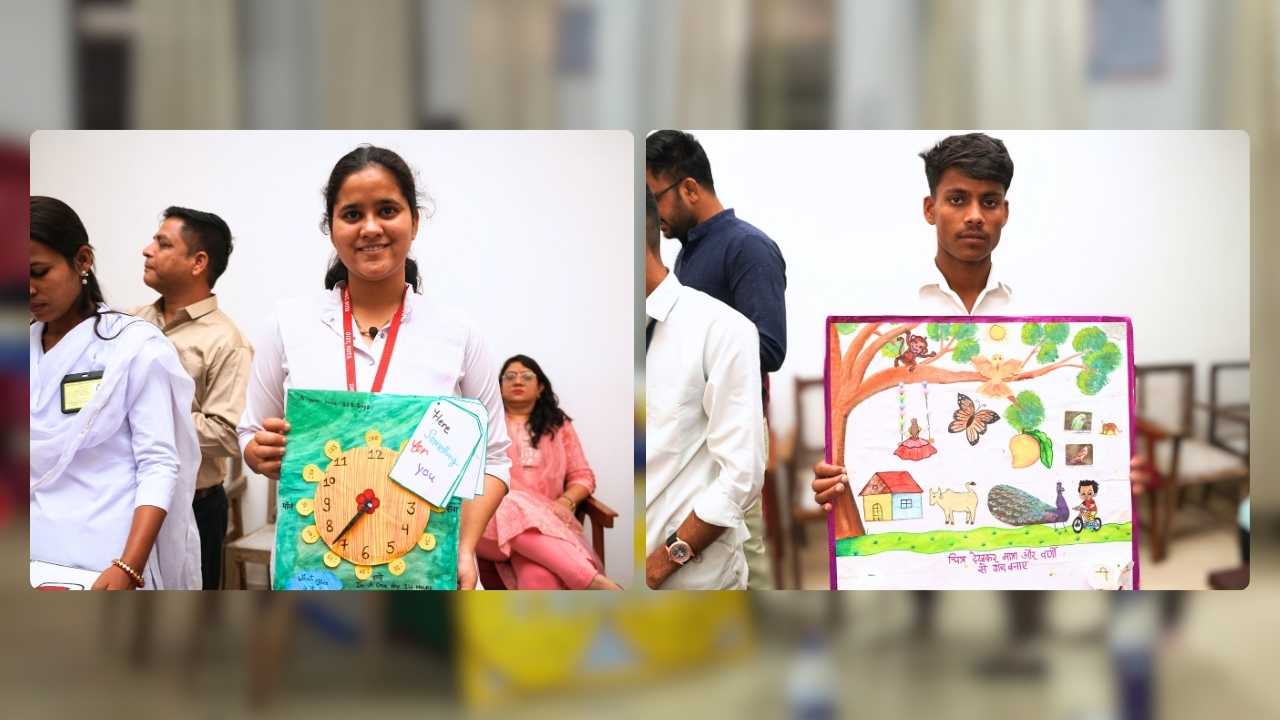
But creating a TLM is not simply a creative activity. It begins with a pedagogical understanding of what students are finding difficult and what might help them understand it better. The answer could be a model, an activity, a visual aid, an interactive resource or even an object created from materials that might otherwise have been discarded.
This is reflected in EdIndia’s work around creating TLMs from scrap, where the emphasis is not simply on making something innovative, but on looking at available resources differently and using them to support learning.
The process of designing a TLM encourages future teachers to think from the learner’s perspective. It requires creativity, but creativity with purpose. The objective is not to create something impressive. It is to make learning more meaningful.
The questions that shape learning
Designing a learning experience and creating resources to support it are important parts of teaching. Equally important is a teacher’s ability to understand how students are thinking and learning.
Of the many skills teachers use every day, questioning is perhaps one of the most powerful. Questions can test recall, or they can reveal understanding. They can show whether a student remembers something or help a teacher understand how the student is thinking.
This is particularly relevant as education moves towards competency-based learning and assessments that focus more on conceptual understanding and higher-order skills.
Sterlite EdIndia Foundation’s Question–Making Competition provides pre-service teachers with an opportunity to practise this skill by designing competency-based questions using frameworks such as Bloom’s Taxonomy. Its purpose is to encourage future teachers to think carefully about what a question requires a learner to do, whether it asks them to remember, explain, apply, analyse or create.
The questions teachers ask shape the kind of thinking students practise. And if classrooms are expected to nurture critical thinking, problem-solving and creativity, teachers need to learn how to ask questions that invite those capabilities.
Together, these three aspects of teaching: planning learning, making it accessible and understanding how learners think show that effective teaching is not a single capability. It is a series of purposeful decisions that ultimately shape a child’s experience of learning.
And it is through such decisions, made every day in classrooms, that the larger ambitions of education policy can be ultimately realised.


From intent to implementation
India’s education policy has set an ambitious direction. The curriculum is changing. Assessments are evolving. Teacher education is being reimagined.
But every education reform eventually reaches one important point of truth: the classroom.
That is where policy becomes practice. A curriculum becomes a lesson. A learning outcome becomes a question. And an educational ambition becomes a child’s experience. This is where implementation matters.
Sterlite EdIndia Foundation‘s work is focused on strengthening the bridge between the education system’s aspirations and the capabilities educators need to turn those aspirations into meaningful classroom practice.
The curriculum can set the direction. Teacher education can build the foundation. But teachers need opportunities to apply, test and reflect on what they know because this is how preparation develops into professional capability.
If we want classrooms that foster curiosity, creativity, problem-solving and critical thinking, these cannot remain aspirations in policy documents. They have to become visible in the everyday decisions teachers make as they design learning, respond to students and adapt their teaching.
The journey, therefore, is from intent to implementation.
The real test of education reform is not how effectively we rewrite the curriculum, but how effectively we enable teachers to bring it to life.
About the Author
Pushpa Chandel is a seasoned education and learning professional with over 15 years of experience across school leadership, teacher development, academic operations, organisational development and digital learning. As Lead – Academic Content and Digital Learning at Sterlite EdIndia Foundation, she leads academic and digital learning initiatives, driving the development of competency-based learning solutions and supporting teacher education across multiple states. Her experience spans school management, EdTech and publishing, with expertise in academic strategy, training and development, project management, change management a