
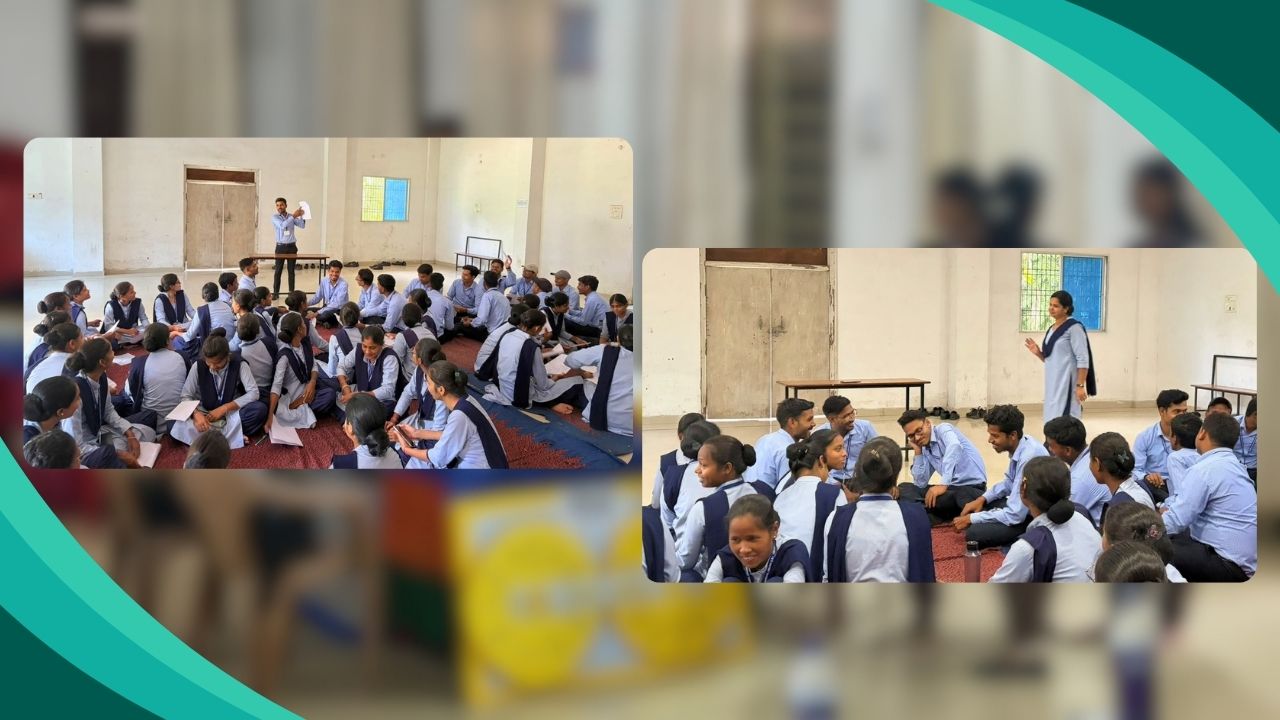
Integrated Teacher Education Program Course: A Simple Guide to India's New Way of Preparing Teachers
Imagine a student who, right after Class 12, gets into a single college program. Four years later, that same student walks out with both a Bachelor’s degree and a B.Ed. degree, ready to enter a classroom as a teacher. No separate three-year degree first. No separate two-year B.Ed. after that. Just one connected journey.
This is the idea behind the Integrated Teacher Education Program course, usually shortened to ITEP. It is one of the biggest changes happening in pre-service teacher education in India today, and it is directly linked to the goals of the National Education Policy (NEP) 2020.
In this blog, we will break down what ITEP actually is, why it matters, how it is different from the old system, and what it means for anyone who dreams of becoming a teacher. We will keep the language simple, because understanding how teachers are trained shouldn’t require a teaching degree of its own.
What Is the Integrated Teacher Education Program (ITEP) Course?
The Integrated Teacher Education Program is a 4-year, dual-degree course that combines a general Bachelor’s degree (like B.A., B.Sc., or B.Com.) with a Bachelor of Education (B.Ed.) degree, all in one continuous program.
Students can join ITEP directly after completing Class 12, through NCET (National Common Entrance Test). At the end of four years, they graduate with two integrated degrees together, for example:

This is different from the traditional route, where a student first completes a 3-year Bachelor’s degree, and only afterwards applies separately for a 2-year B.Ed. program, a total of five years, done in two disconnected stages.
ITEP compresses this into four years and, more importantly, blends subject knowledge and teaching skills together from year one, instead of teaching them one after the other.
Why Was ITEP Introduced?
The idea comes straight from NEP 2020, which recognised a long-standing problem in India’s teacher preparation system: subject learning and teacher training were happening in silos. A student would spend three years learning history or science, and only then, almost as an afterthought, learn how to actually teach it.
NEP 2020 proposed that by 2030, the 4-year integrated B.Ed. would become the minimum degree qualification for entering the teaching profession. You can read more about how this policy reshapes teacher preparation in our detailed post on what NEP 2020 actually changes about teacher education in India.
The goals behind ITEP include:

How Is ITEP Different from the Traditional B.Ed. Route?


This is precisely the gap that organisations working directly with State Councils of Educational Research and Training (SCERTs), District Institutes of Education and Training (DIETs), and B.Ed./D.El.Ed. colleges try to close, through digital learning tools, mentorship, and data-driven support for institutions.
What Should Aspiring Teachers Know Before Choosing ITEP?

The Bigger Picture: Why This Matters for India’s Classrooms
At the heart of both ITEP and the broader push to strengthen pre-service teacher education is one simple truth: a well-prepared teacher can shape hundreds of young lives over a career. Strengthening how we train teachers before they ever enter a classroom is one of the most effective ways to improve learning outcomes at scale.
This is exactly the work Sterlite EdIndia Foundation focuses on- supporting pre-service and in-service teachers, working alongside SCERTs and DIETs, and helping India’s teacher education institutions build stronger, more reflective, more classroom-ready educators. You can learn more about this work on our Teacher Education Program page, or read more stories and insights on our blog.
If you’re an institution, educator, or organisation interested in strengthening teacher education in your state, feel free to get in touch with us or explore how you can join our mission.