
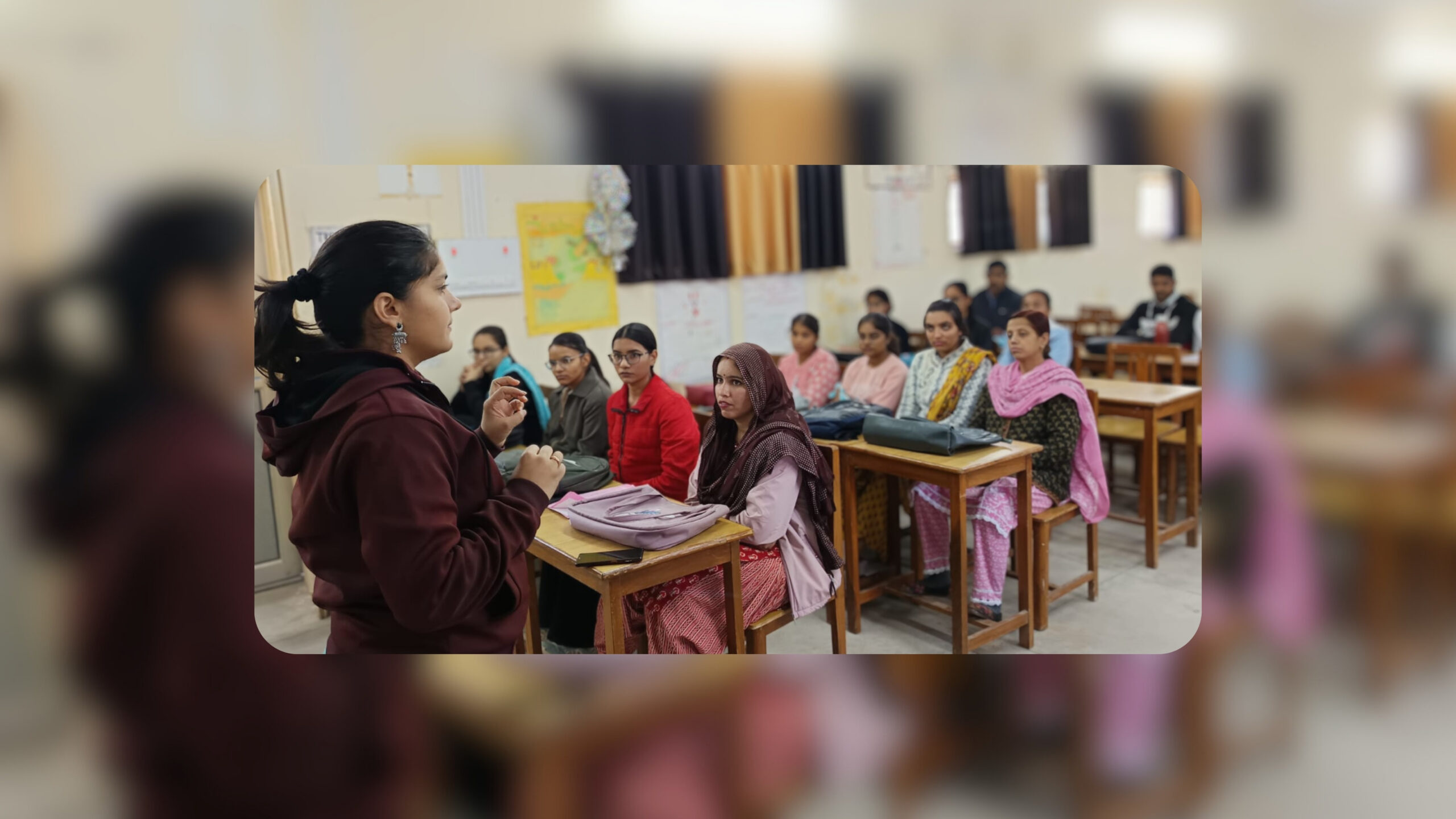
A Day in the Life of an EdIndia Project Coordinator
More Than a Job Title
When we think about improving education, we often picture classrooms, teachers and students. We see workshops being conducted, learning materials being shared and teachers participating in discussions. But have you ever wondered who brings all of these pieces together?
At Sterlite EdIndia Foundation, that person is often a Project Coordinator.
A Project Coordinator is not someone who spends the day behind a desk. They are constantly on the move, travelling to teacher education institutions, meeting Principals and faculty members, coordinating with government officials, facilitating workshops and listening to the experiences of teachers and pre-service teachers. Every day brings a new destination, a new challenge and a new opportunity to make a difference.
Behind every successful teacher training programme, every partnership with a teacher education institution and every meaningful conversation with educators is a Project Coordinator. They work closely with government institutions, teacher educators, pre-service teachers and in-service teachers, helping turn plans into meaningful learning experiences that strengthen education from the ground up.

Every Day Looks Different
There is no such thing as a typical day for a Project Coordinator. Every morning brings a different destination and a different purpose. One day may begin with an early morning train journey to a District Institute of Education and Training (DIET), while the next could involve travelling for a meeting with education officials to discuss upcoming activities. Some days are spent facilitating workshops, while others are devoted to planning, reviewing progress or meeting faculty members to understand how programmes can better support their needs.
Unlike a typical office role where the day follows a predictable routine, fieldwork is constantly changing. A Project Coordinator may spend hours travelling between districts, carrying workshop material, coordinating with institutions over phone calls and adjusting plans on the go. Every institution, every educator and every group of learners is different, making each visit a new learning experience.
Building Relationships That Matter
A significant part of the role is building relationships. Before any workshop is organised or any training session begins, Project Coordinators spend time meeting Principals, DIET faculty, teacher educators and education administrators. These conversations are not simply about schedules or logistics. They are opportunities to understand local priorities, discuss challenges and work together to find practical ways of strengthening teacher education.
Trust develops gradually through regular interaction, responsiveness and a shared commitment to improving learning. Over time, Project Coordinators become familiar and trusted partners within the institutions they support. They become the people institutions call when they need support, guidance or simply someone who understands their context.
Why Choose a Career in the Field?
Not everyone working in education stands in front of a classroom every day. Many choose to contribute by supporting teachers, strengthening institutions and helping improve the education system from behind the scenes.
For Project Coordinators, the motivation comes from seeing change happen first-hand. They witness a hesitant pre-service teacher becoming confident, a faculty member adopting a new teaching practice or an institution embracing new ideas. Every visit reminds them that meaningful change begins with conversations, collaboration and consistent support.

Learning with Future Teachers
One of the most fulfilling aspects of the role is working with pre-service teachers who are preparing to enter the profession. These aspiring educators arrive with enthusiasm, curiosity and a desire to become effective teachers. Through workshops, learning circles and interactive sessions, Project Coordinators encourage them to think beyond textbooks and lesson plans. Discussions often focus on child-centred teaching, classroom engagement, reflective practice, inclusive education and creative ways to make learning meaningful. Rather than relying only on lectures, participants are encouraged to share experiences, solve classroom scenarios together and learn from one another.
It is always rewarding to watch students who are initially hesitant become more confident as they present their ideas, ask questions and actively participate in discussions. These are often the moments that remind Project Coordinators why they chose this profession.
The process of learning continues even after a pre-service teacher becomes a teacher. Project Coordinators keep working together with educators, organising workshops that allow them to share their knowledge and improve their professional skills. The workshops provide opportunities for teachers to exchange ideas, reflect on their classroom experiences and explore new approaches to teaching. They also introduce emerging themes such as Artificial Intelligence in Education. These discussions are not about replacing teachers with technology. Instead, they explore how technology can support educators by simplifying routine tasks, assisting lesson planning and making classroom learning more engaging.
Life on the Road
One of the biggest differences between working in an office and working in the field is that no two days unfold in the same way. Travel is an integral part of the role. Sometimes it involves catching an early morning bus to a remote district. Sometimes it means travelling for hours only to find that a meeting has been rescheduled. There are days when workshops run longer than expected, when weather disrupts travel plans or when internet connectivity becomes a challenge during a session.
Fieldwork demands flexibility, patience and quick decision-making. Yet these are often the days that create the most memorable experiences.
Neha Kumari, our Project Coordinator from Rajasthan, recalls one field visit that reminded her that meaningful experiences often begin even before a workshop starts.
“During a visit to DIET Ajmer in Rajasthan, I realised there was no transport available to reach the institution. After waiting for a while, I gathered the courage to ask a stranger for help. He kindly offered me a lift, and I reached the DIET on time.
Later that day, I met a pre-service teacher who had been married at a young age but had continued her education with the dream of becoming a teacher. Meeting her reminded me that every aspiring teacher carries a unique story of determination. Field visits are not only about conducting workshops; they help us understand people’s journeys and the aspirations that inspire them to keep learning.”
Listening Before Leading
While facilitating workshops is an important part of the role, listening is equally important. Every visit provides an opportunity to hear directly from teacher educators, students and teachers about their experiences, challenges and aspirations.
For Tanuj Bahuguna, Project Coordinator in Uttarakhand, one of the biggest lessons came not from a workshop, but from building relationships.
“When we began working with DIETs after signing the MoU with SCERT, there was some hesitation towards our interventions. Instead of expecting immediate acceptance, we invited faculty members to observe our sessions and share their feedback. Their suggestions helped us improve, and gradually they became active partners in the process.
Today, many of those faculty members actively support our work, and it is rewarding to see pre-service teachers from these institutions participate confidently in different competitions and learning activities. This experience taught me that meaningful partnerships are built with patience, consistency and a willingness to listen.”
A faculty member may speak about curriculum changes, a pre-service teacher may share concerns about classroom practice during internship, or an experienced teacher may describe what has worked well with their students. These conversations help shape future programmes and ensure that every initiative remains relevant to the people it is designed to support. Meaningful change in education begins by listening to those who experience it every day.


The Small Moments That Stay Forever
For Ritesh Kumar, our Project Coordinator in Chhattisgarh, one workshop became memorable because of a simple yet meaningful interaction with a pre-service teacher.
“At a workshop at Sandipani Academy Institute of Teacher Education, Bilaspur, Chhattisgarh, I met one of the D.El.Ed. students who was unable to write the Hindi letter ‘व’. When I spoke to him, I realised he was too shy to admit this in front of his classmates. Instead of ignoring it, I drew a few dots on the pages of his notebook and asked him to practise by joining them. After repeating the exercise several times, he was able to write the letter confidently without fear of making mistakes.
This incident reminded me that sometimes the smallest actions make the biggest difference. We often focus on delivering workshops and completing activities, but helping one person overcome a challenge can be just as meaningful.”
Ritesh also believes that one of the most valuable parts of Sterlite EdIndia Foundation’s programmes is the opportunity to support pre-service teachers during their internships. Watching them step into real classrooms, interact with students and gradually grow into confident educators makes the experience rewarding. It is during these hands-on experiences that theory begins to translate into practice, helping future teachers develop the confidence and skills they need for their profession.
Many of the most rewarding moments never appear in reports or presentations. They are found in the small victories that happen during the course of a programme. A student who gains the confidence to present a lesson plan for the first time, a teacher who shares how a new classroom strategy has improved student participation or a faculty member who adopts collaborative practices within the institution—these moments quietly reflect the impact of consistent engagement. They remind Project Coordinators that lasting change is often built through small, meaningful interactions rather than dramatic transformations.
More Than Coordination
The role of a Project Coordinator extends far beyond planning workshops or managing schedules. It is about travelling to places where support is needed, building relationships that last, understanding local realities and finding practical solutions to everyday challenges. It is about balancing planning with flexibility, structure with empathy and objectives with people.
At Sterlite EdIndia Foundation, our programmes are built on collaboration, and Project Coordinators play a central role in making that collaboration meaningful. They connect institutions, educators and communities through shared learning and continuous engagement. Their work may not always be visible, but it is reflected in every workshop successfully conducted, every educator empowered with new ideas and every institution that grows stronger through partnership.
The journey is often demanding. It involves early mornings, long hours on the road, changing plans and constant learning. Yet it also offers something unique, the opportunity to witness change where it begins. Every conversation, every workshop and every field visit contributes to stronger teacher education and, ultimately, better learning experiences for children.
Know more about our Teacher Education Programme Click here.