
How Dashboards Are Helping Municipal Schools See Every Student
In a classroom, it is often easy to notice the loudest voices, the students who raise their hands, the ones who score high, the ones who seem confident. But what about the quieter characters, the backbenchers, and the window wanderers? The students who struggle and are not able express it, the ones who fall behind without being noticed, the ones whose marks hide a deeper challenge, that is, the lack of insight into what is making the students fall behind even after teachers, administration and the entire education system pumping so much of resource into it. The devil always lies in the details, and when it comes to school education, data and insights into subject-wise, class-wise, question-paper wise granularity can through light on the problem.
At Sterlite EdIndia Foundation, we believe that every student’s story matters. And sometimes, the best way to listen is through data. As part of our Data Analytics Support Program, we are working closely with the Mira Bhayandar Municipal Corporation (MBMC) to provide data analytics assistance to five of their schools that cater to the academic needs of 10th grade students. By offering school administrators a customised and user-friendly interface to interact with raw student data and providing insight into their performance, the foundation is empowering these leaders to make informed, data-driven decisions and to concentrate their attention on specific areas that impact the success of their schools. This attempt at supporting schools with a tailor-made dashboard is proving to be useful in getting to the root cause of poor performance of students. For instance, in one of the reviews, it was identified that most of the students found one particular question difficult to answer, which clearly indicates that the class needs a revision in one particular chapter.
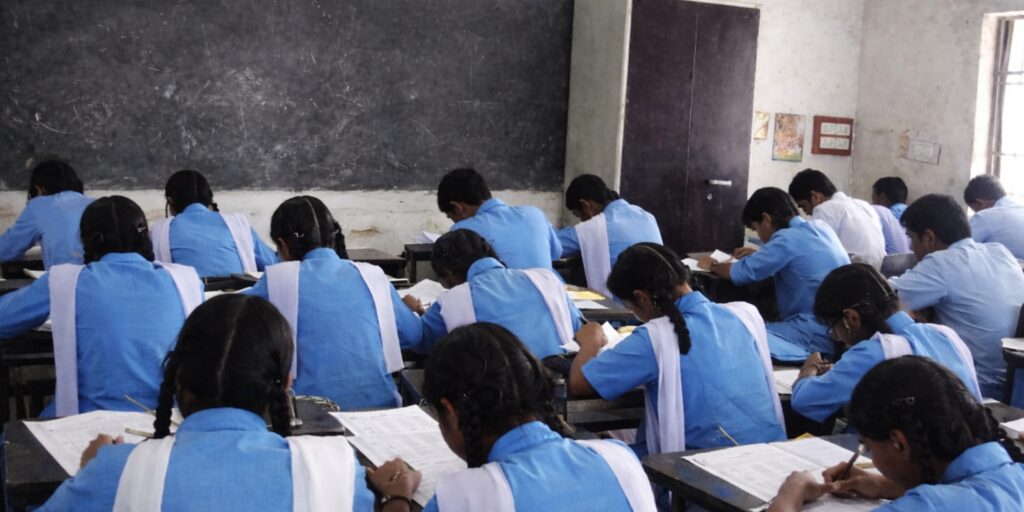
Initially, we focused our analysis on the academic performance of over two hundred fifty students during their mid-term exams. However, instead of just looking at whether a student passed or failed, we delved deeper and provided more in-depth insight through the development of our data visualisation dashboards. Our dashboard not only displayed a breakdown of student success/failure but also indicated the number of students who were at risk of failing and how different demographic groups (e.g. boys versus girls) were affected differently by the same academic content. We also mapped academic trends across schools and subjects, helping administrators understand where students were facing greater learning challenges and where additional academic support could be most effective.
What emerged was not just a set of charts, it was a story.
The data helped highlight that language subjects required more focused academic attention during this phase of learning. A closer look at the data revealed that specific skills, such as letter writing, would benefit from more targeted classroom practice and revision. These insights helped administrators and school heads see exactly where support was needed.
This led to focused review meetings and discussions, including with MBMC officials such as Ms. Kavita Borkar, Deputy Municipal Commissioner, MBMC. Instead of generalised interventions, decisions could now be more targeted towards specific subjects, specific skills, and specific student groups.
And this is just the beginning. We are now analysing preliminary exam data from the same schools. This will help track whether the steps taken after the mid-term analysis are making a difference, and what further support may be required as students prepare for their SSC examinations.
But academic performance is only one part of the picture.
Alongside this, we are also working on a large-scale data inventory across 36 MBMC schools. This includes mapping the availability and condition of basic school resources like benches, blackboards, classroom infrastructure, and more. By converting this information into dashboards, the administration can plan better, allocate resources where they are most needed, and ensure that learning environments are supportive and well-equipped.
At Sterlite EdIndia Foundation, we do not see technology-based initiatives as simply numbers; instead, they are viewed as a way to create a better understanding of what numbers make visible. Every dashboard tells a story of potential, struggle, effort and progress. When teachers can see which students need help in which subjects, support becomes more personal. When administrators can see patterns clearly, decisions become more thoughtful. And when systems begin to observe closely, no child gets lost in the crowd.
While the expected outcome from all of these initiatives will take time to realise, something important has already taken place; students are becoming more visible, their challenges are being better understood, and their journeys are being supported more intentionally.
And that, to us, is the real impact of data, when it stops being abstract and starts becoming human.