
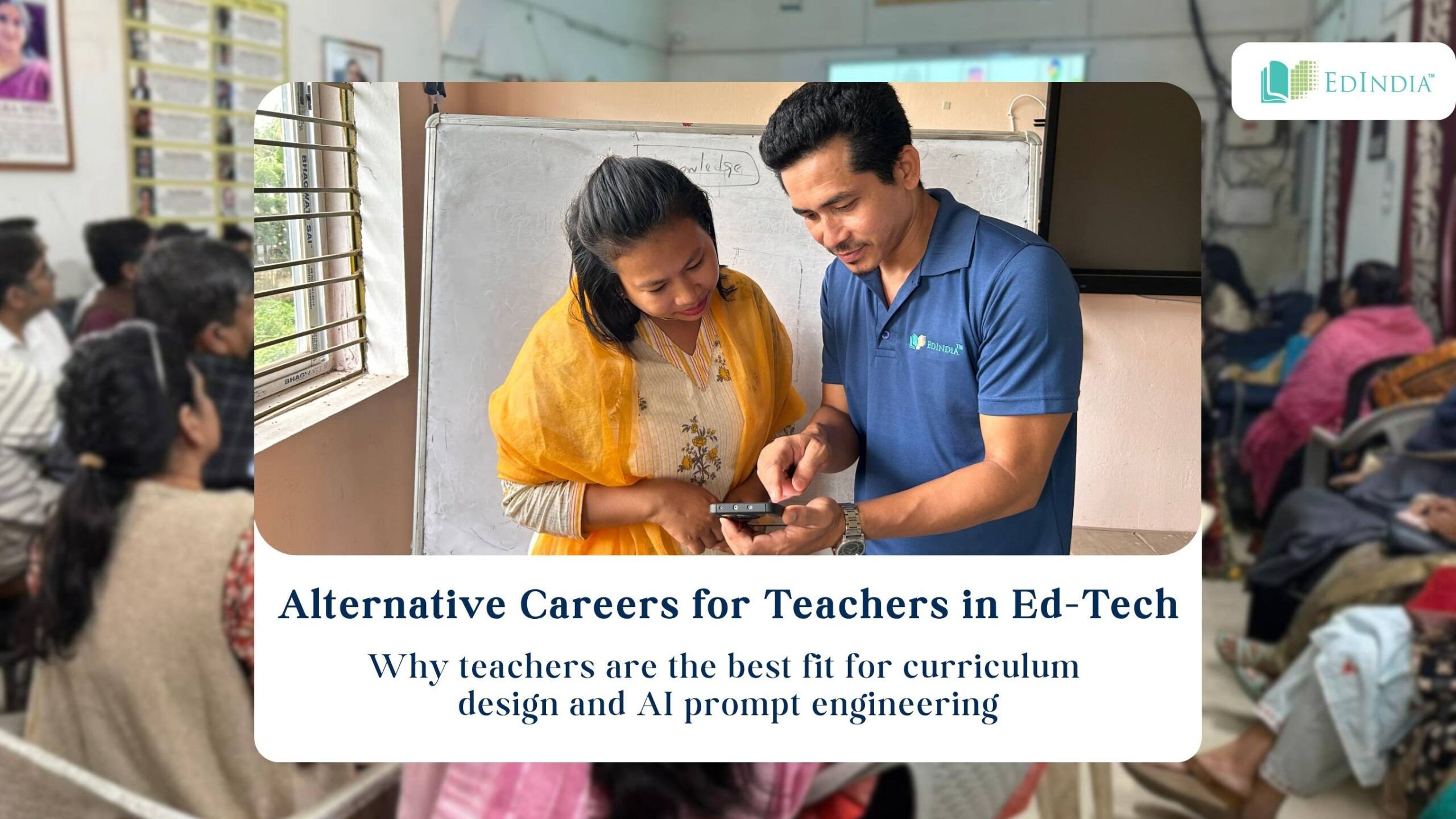
Alternative Careers for Teachers in Ed-Tech
Why teachers are the best fit for curriculum design and AI prompt engineering.
A few years ago, if someone had told a teacher that they could build digital learning platforms or even guide how artificial intelligence teaches students, it might have sounded far-fetched. Today, it’s quietly becoming a reality.
Across India, education is changing. Classrooms are expanding beyond four walls, lesson plans are turning into digital modules, and technology is becoming a regular part of how students learn. Yet, in the middle of all these changes, one thing remains constant, the need for someone who truly understands learning; and that someone is still a teacher.
Teachers are already tech-savvy: The education industry is creating new opportunities for employment. Positions such as developing educational programs or creating quality curriculum development, utilising artificial intelligence and writing prompts, among other related positions can continue to grow in popularity within the education industry. These are typically thought of as tech-jobs. However, when you break it down, they all revolve around one common element which is, how to effectively teach children so that they have an enjoyable experience while learning. These roles really are no different than what teachers are currently doing.
Adapt vs Adopt: Think about what happens in a classroom. A teacher takes a complex concept and finds a way to explain it so that every student can understand it. They observe who is struggling, who is ahead, and who needs a different approach. They adjust their methods, bring in activities, ask questions, and create an environment where learning happens. This ability to understand learners, adapt in real time, and simplify ideas is exactly what is needed in roles like curriculum design and AI-based content creation.
Prompts Experts: In many ways, teachers are already designers. Every lesson plan they create is a structured learning experience. Each lesson has an objective, a sequence of experiences/activities, and an expected outcome. The design elements of delivering education via the digital medium will change, however, the thought process will be similar. Whether it is authoring a digital module, or creating prompts for an AI tool, the goal is still to support learners in a sequential manner. Therefore, teachers do not have to “start over” with Ed-Tech because teachers are already doing the foundational work.
AI cannot replace teachers: The rise of artificial intelligence in education has made this even more important. It has become increasingly important for educators and students to work together. There is often a fear that AI might replace teachers; however, the truth is that AI cannot replace teachers because AI provides answers but has no understanding of the context behind those answers, like a teacher might have. AI cannot see the confusion on students’ faces or change its tone of voice according to a student’s individual needs. AI won’t be usable unless given direction; therefore, AI must have direction from an individual who will direct AI as to what to say/how to respond/how to create a learning experience for students. This is why teachers are so necessary.
Teachers are one with Technology: When teachers contribute to AI prompt engineering, they are not just writing instructions. They are shaping how learning happens through technology. They ensure that the content is not only correct but also meaningful, relatable, and easy to understand. In this way, teachers are not being replaced by technology, they are becoming the ones who make technology more effective.
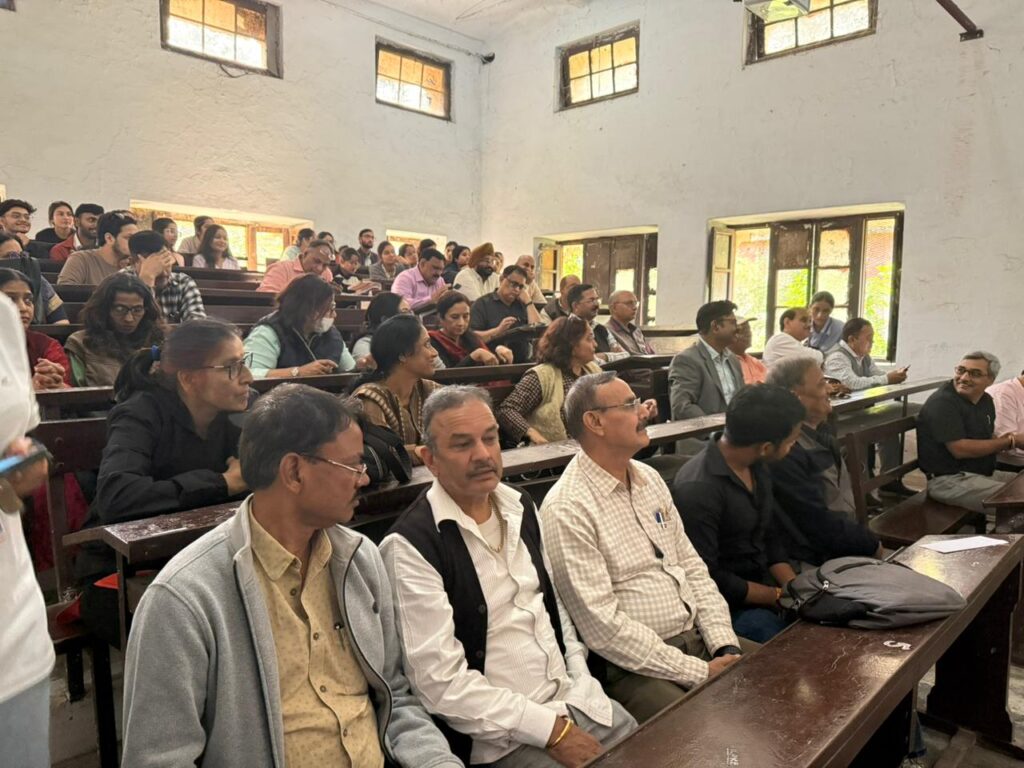
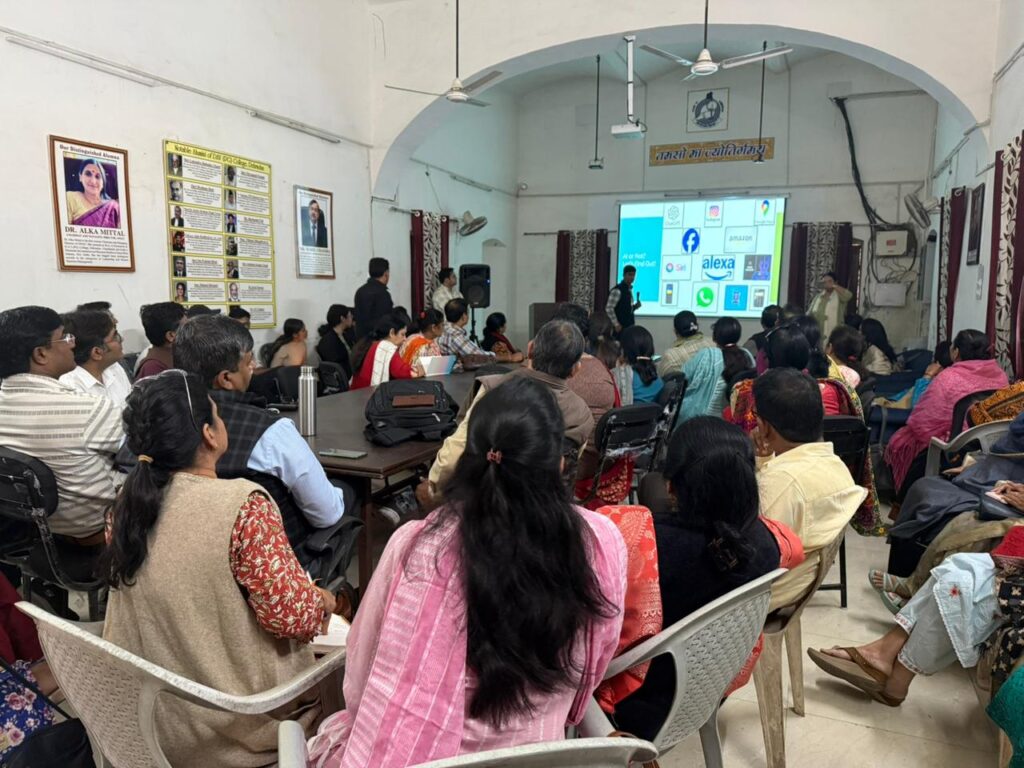
Opportunity for Teachers: For both pre-service and in-service teachers, this represents new opportunities. The dilemma of choosing between teachers and the use of technology as a facilitator for learning is now over; teachers are no longer limited to classrooms, but rather can now expand their contributions as an educator across multiple settings through the use of various tools. A teacher today has the potential to impact multiple environments through traditional teaching methods, as well as through other forms of delivery, for example via digital tools, or through community-based organizations.
At Sterlite EdIndia Foundation, this shift is something we see closely through our work on the ground. Whether it is through our Teacher Education Program or Institutional Strengthening Program, the focus has always been on building teachers who are confident, adaptable, and ready for the future. Our work goes beyond classrooms, supporting educators to think about learning in a more practical and responsive way.
Through our Data Analytics Support Program, we are also enabling data-driven decision making in education, helping systems understand where students are learning well and where they need more support. This is an important part of building data-driven education in India, where insights from the classroom can guide better planning and teaching practices. When teachers are supported with the right data, they are able to respond more effectively to student needs, making learning more targeted and meaningful.
At the same time, our efforts in educating communities reflect a broader belief, that education does not exist in isolation. Strong classrooms are built when teachers, institutions, and communities work together. This is what an effective education empowerment program in India looks like in practice.
All of this points to one larger idea. The future of education is not just digital. It is not just about tools or platforms. It is about people who understand learning and can shape it in different forms.
And that brings us back to the teacher.
The role of a teacher is no longer limited to delivering lessons. It is evolving into designing learning experiences, guiding technology, and contributing to systems that impact thousands of students. What may look like “alternative careers” today are, in many ways, a natural extension of what teachers already do.
The question, then, is not whether teachers fit into the future of Ed-Tech.
The real question is, how far can they take it?
Because if learning is at the centre of education, there is no one better to shape its future than those who understand it best.